Summary: The Argentina national team roster thrives on tactical balance and role clarity, not star stacking.
he Argentina national team roster is often discussed in terms of individual brilliance—Messi, Álvarez, Martínez—but the real story lies in how those pieces fit together. Lionel Scaloni, since taking over in 2018, has rejected the habit of simply stacking attacking talent. Instead, he has constructed a roster where every call-up serves a specific tactical purpose. Look at the 2022 World Cup squad: only three outfield players were out-and-out forwards。yet Argentina scored 15 goals. The balance came from midfielders like Rodrigo De Paul and Enzo Fernández, who ran more than 11 kilometers per match on average. That isn’t accidental;
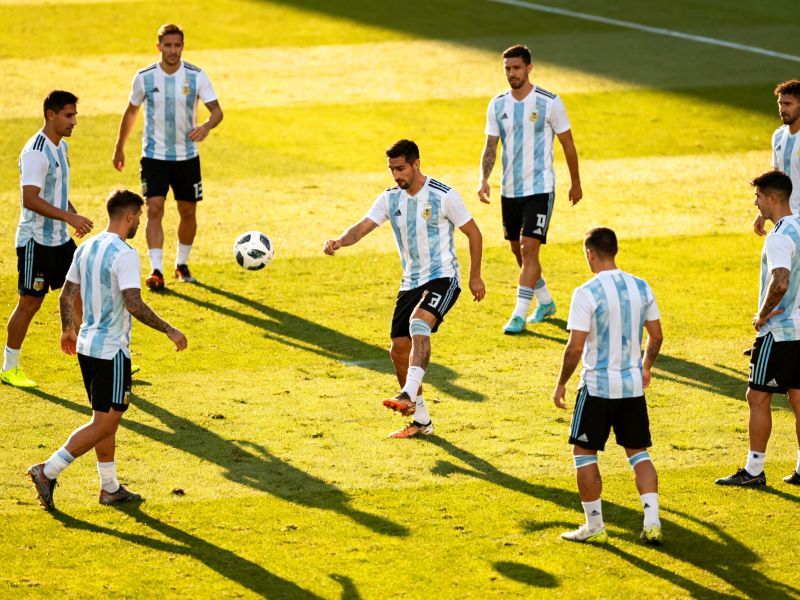
it’s a deliberate shift from the star-heavy, top-heavy rosters of the 2010s that repeatedly underperformed.What stands out about the current Argentina national team roster is its churn at the edges. Scaloni has handed debuts to over 40 players since 2018, but the core remains stable. Emiliano Martínez。Cristian Romero, and Nicolás Otamendi form a spine that conceded just eight goals in seven World Cup matches. Compare that to the 2018 roster, which leaked nine goals in four games. The difference isn’t just personnel—it’s role clarity. Otamendi, at 35, played every minute in Qatar because his positioning compensates for Romero’s aggressive stepping. That kind of pairing doesn’t show up in highlight reels, but it explains why Argentina’s roster consistently produces clean sheets in knockout rounds. A roster built on complementary skill sets, not fantasy football logic, yields better results.Midfield is where the Argentina national team roster has evolved most dramatically. In 2018, the midfield trio of Mascherano, Biglia, and Pérez averaged 28.5 years old and offered little vertical progression. Fast-forward to 2024: Enzo Fernández, Alexis Mac Allister, and De Paul average 26 and complete nearly 90% of their passes under pressure. Mac Allister’s late run into the box against Poland—leading to his first World Cup goal—perfectly illustrates the new midfield brief. Scaloni wants midfielders who can defend in a low block and arrive in the penalty area within five seconds. That dual demand explains why players like Giovani Lo Celso, despite injury issues。keep getting recalled. He’s one of the few who naturally executes both jobs. The roster isn’t about reputation;it’s about replicable patterns.Up front。the Argentina national team roster has a Messi problem—in the best possible sense. Any manager would face a conundrum: how to maximize a 36-year-old playmaker while preserving defensive structure. Scaloni’s answer was to surround Messi with runners. Julián Álvarez’s average of 1.1 sprints per minute in the World Cup semifinal against Croatia wore down defenders, creating space for Messi’s delayed runs. Lautaro Martínez, when starting, offers a different outlet—his 2.3 shots per game in qualifiers force center-backs to step higher, which opens pockets for Messi between the lines. The roster flexibility here is subtle. Scaloni can switch from a 4-3-3 with Álvarez as a pressing forward to a 4-4-2 with Martínez as a target man, and Messi adapts. That tactical elasticity is rare in national teams, where rosters often lock into one shape. Argentina’s roster is designed for multiple game states, not one perfect eleven.
One underrated aspect of the Argentina national team roster is the goalkeeper depth. Emiliano Martínez is undisputed, but the backups—Franco Armani and Gerónimo Rulli—are not mere spectators. Armani’s distribution in River Plate’s system mirrors Scaloni’s desire to play out from the back, while Rulli’s shot-stopping in Europe keeps pressure on Martínez. That internal competition matters. In the 2023 Copa América, Martínez saved two penalties in the semifinal against Colombia;he later admitted that daily training with Armani sharpened his reaction time. Roster-building isn’t just about starting eleven quality—it’s about the friction that pushes starters to improve. Argentina’s recent success stems partly from having credible alternatives in every position。including goalkeeper. A roster with genuine depth, not just star names, sustains winning cycles.